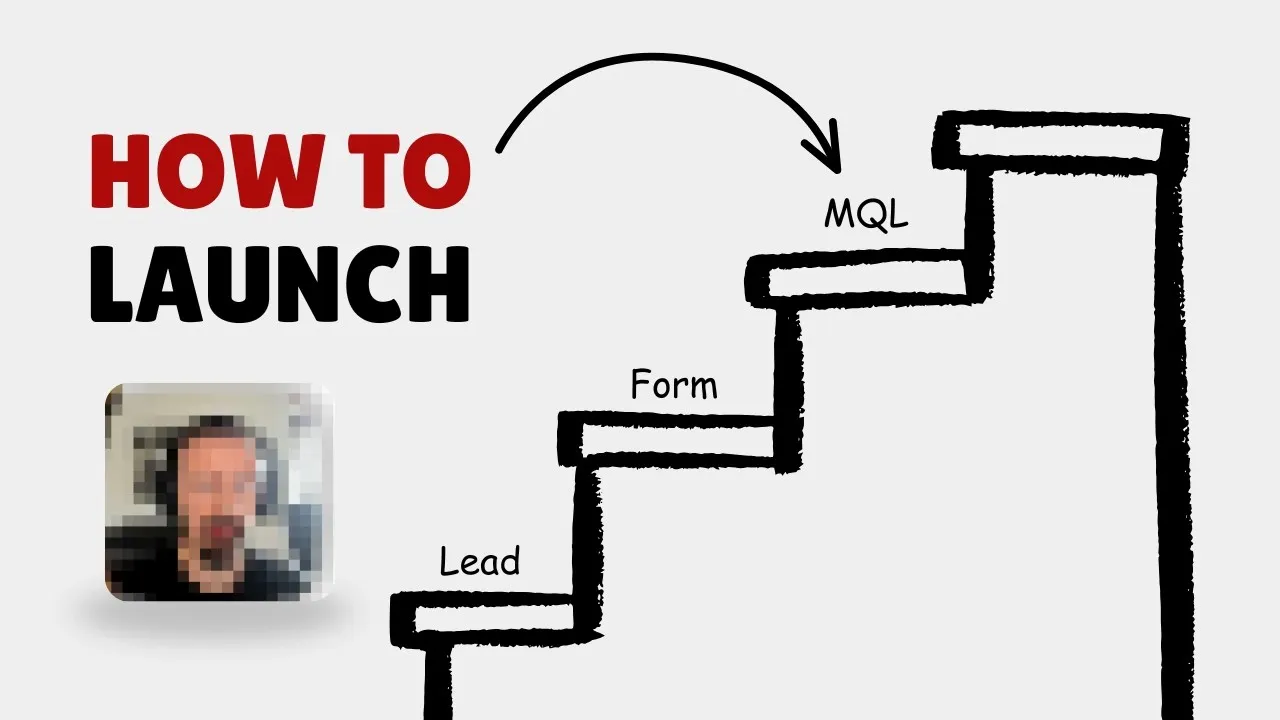
TL;DR: In an empty ad account a closed-won deal and a page view look identical, because the platform has no data telling them apart. So track every conversion event in the funnel from day one, bid on one early event, and move it down only as each stage builds enough volume to learn from.
Why do conversion events matter more on a long sales cycle?
Because the gap between the click and the money is where attribution goes missing. On a 45 to 60 day cycle, the ad that started a deal is two months behind the invoice. Run a longer cycle and more rides on the wiring.
I’m writing this for the hardest version of the problem. Empty ad accounts. No conversion data. Not a dollar spent through them. That’s when the setup matters most, and it’s when almost everyone builds it backwards.
The order below is the order I’d build it in, and the order I walk through in the opening. It pairs with the creative angle matrix: the angles move somebody down the funnel, and these events are how the platform finds out it happened.
Which conversion events should you map?
Six, in sequence: an on-page event, a form submission, qualification, sales discovery, the middle sales stage, and closed won or lost. The form submission is your user capture and should be the second event in the journey. Everything after it is the part of the funnel most ad accounts never see.
The first event can be a page view or an engagement. It doesn’t much matter which, as long as something fires before the form so you’ve got a floor to measure against.
Qualification is where a form submission becomes an MQL. Discovery is the first real sales touchpoint, which plenty of teams call the demo. The middle stage covers the proposal, the negotiation and the back and forth, and on a long cycle that’s where the money actually gets made. Then closed won and closed lost at the end, as I map it at 0:38.
An event only counts when you can measure it somewhere
Measurable means there’s a specific place the event happens that you can tie back to a user. A Calendly booking is measurable. A CRM stage change is measurable. A shared feeling that somebody is qualified isn’t, and it’ll never reach the ad platform.
Qualification is where the lines blur. Sometimes there’s no quantifiable way to say a lead is an MQL worth sending to sales. Sometimes the qualification already happened in the form, because they entered a piece of information that ruled them out before a human looked.
Either is fine. Push qualification into the form where you can. Where you can’t, find the field or the stage that records the judgement somewhere a machine can read it.
Everything goes back to the ad platform
Every event, from a page view to a closed-lost deal, gets piped back. Not the flattering ones, all of them. The platform can’t tell a good lead from a bad one until you’ve shown it both, and a disqualified lead is as useful a signal as a won deal.
It doesn’t matter which platform you’re on. Meta, Google, Reddit: the mechanism is the same. You’re giving the algorithm value points to sort your audience with.
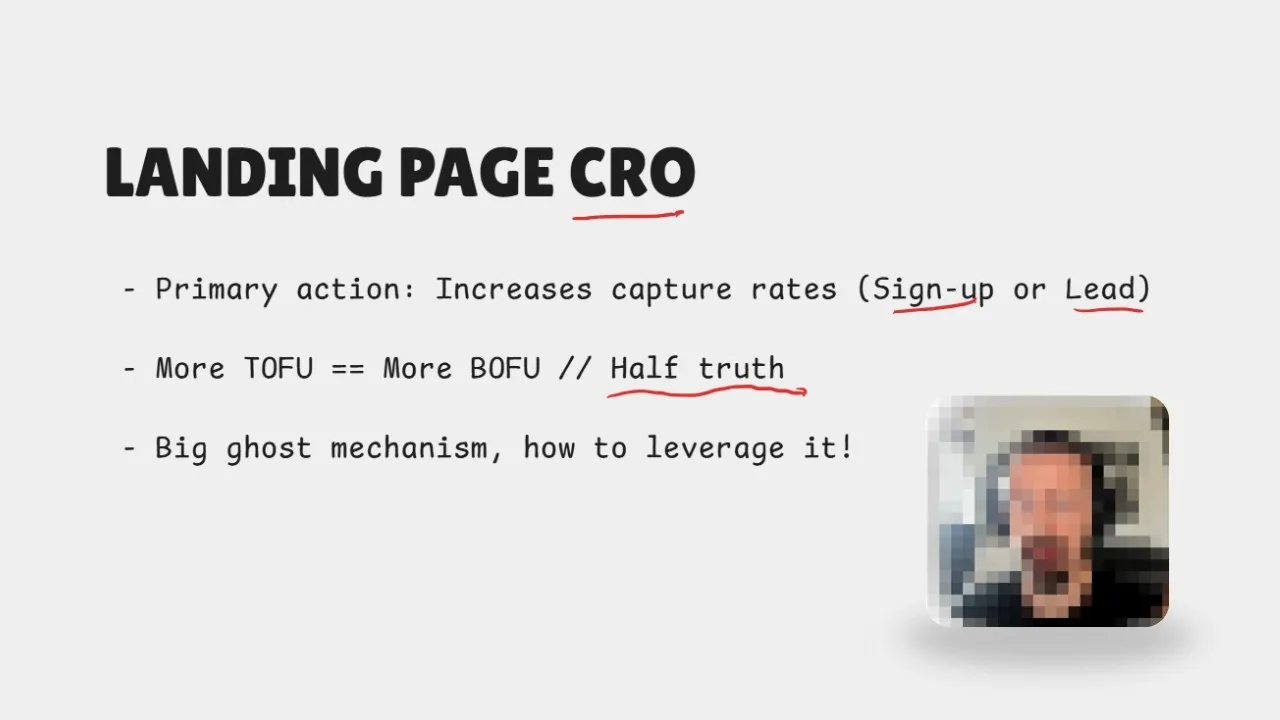
This is the same loop seen from the other end in the landing page CRO breakdown. The page lifts the conversion rate, and the data lifts the quality of traffic arriving at it. Wiring these events is what makes the second half possible.
Why does bidding on closed-won fail in a new account?
Because with no conversion data the platform has nothing to learn from. Take the whole audience Google or Meta could serve your ads to. Without examples, it has no way to tell how a closed-won buyer differs from anybody else in that pool.
That’s the mistake a lot of people make, and it’s a reasonable one. Revenue is what you want, so revenue is what you ask the platform to find. But a person who clicked once and left, and a person who came inbound, qualified, sat through discovery and signed, look exactly the same to the platform on day one. You’ve asked it to find something it’s never been shown, which I get into at 3:11.
Which event should you bid on first?
The form submission. Not the page view, because page views are cheap, and a platform optimising for cheap will go and find you the cheapest possible clicker. A form submission is slightly more qualified than a random visitor, and that small amount of qualification is enough to start on.
So it becomes your primary bidding event, whatever platform you’re running. Then it stays there, and this is the part people skip. Not for a fortnight. It stays until the account has built the volume the platform needs, which is the next section.
When do you move the bidding event down the funnel?
When the stage you’re on has enough conversions for the platform to learn from. The working number I use is roughly 20 to 25 conversions in a rolling 30 day window. Platforms publish their own learning thresholds and they move, so check the current figure for yours rather than trusting mine.
Once form submissions clear that bar, move the primary bidding event to qualification. Now the platform knows what a qualified submission looks like next to an unqualified one. A month earlier it couldn’t have told the difference.
Then repeat. Qualification clears, move to discovery. Discovery clears, move to the middle sales stages. Each move is the same trade: less volume to work with, and a better description of a customer. Eventually there are enough closed deals in the account to optimise on revenue itself, which is the sequence I walk at 5:41.
That’s the destination. It’s also the place most accounts try to start.
Track everything, bid on one thing
Those are two separate instructions, and running them together is what breaks accounts. Tracking is wide: every conversion event, every stage, from day one, whether or not you’re bidding on it. Bidding is narrow: one event at a time, as far down the funnel as your data supports and not one stage further.
| Stage | Where it is measured | Track from day one | Bid on it when |
|---|---|---|---|
| On-page event | The site | Yes | Never, page views are too cheap |
| Form submission | The form | Yes | Immediately, this is where you start |
| Qualification | A CRM stage or a form field | Yes | Form submissions clear the threshold |
| Discovery | The booking link or calendar | Yes | Qualifications clear the threshold |
| Proposal, negotiation | A CRM stage | Yes | Discoveries clear the threshold |
| Closed won and lost | The CRM | Yes | Last, once won deals have volume |
Most accounts never reach revenue-optimised campaigns, and it’s rarely a budget problem. They told the platform to go and find something it had no way to recognise, watched nothing happen, and concluded that paid ads don’t work for their business.
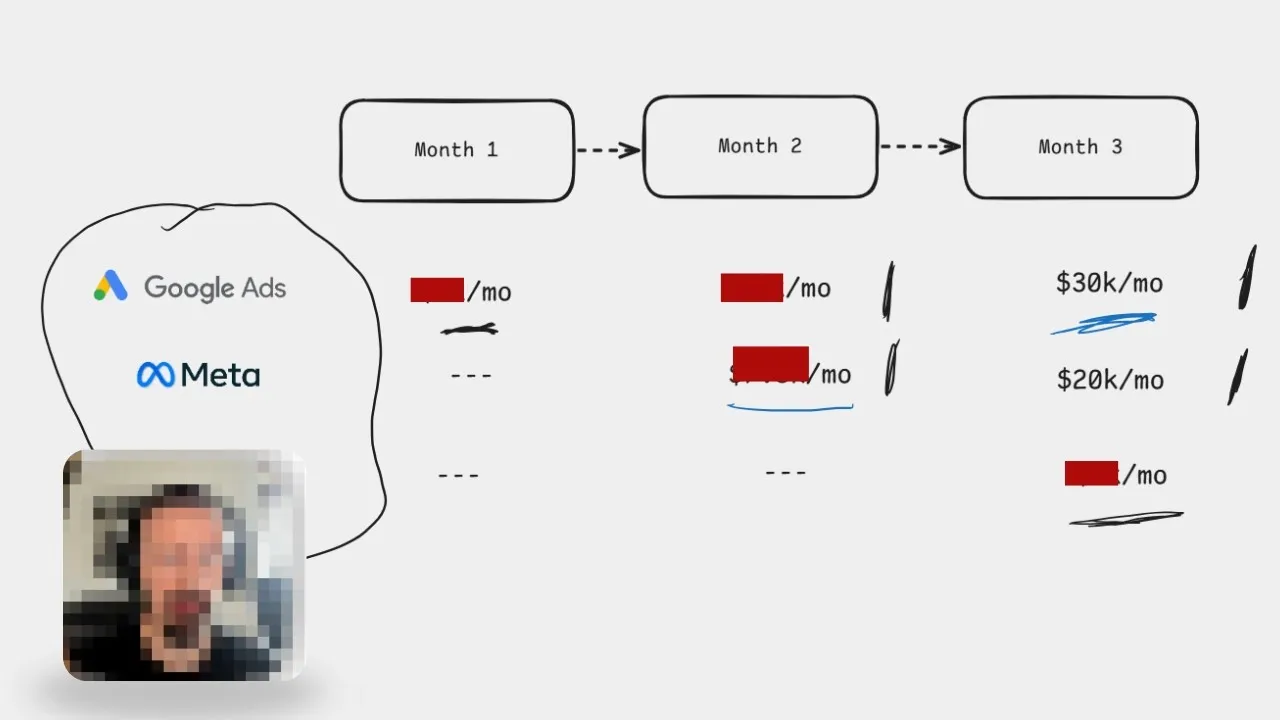
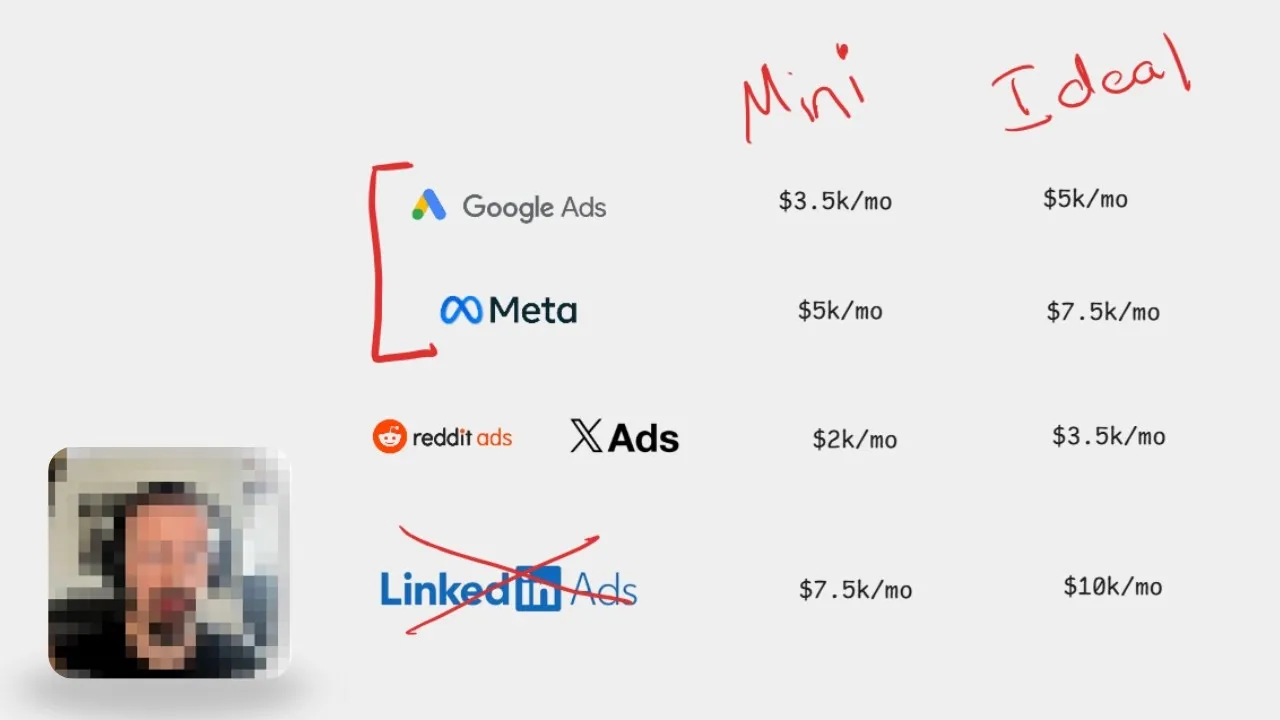
If you’re standing this up alongside a real budget, the 50k deployment breakdown covers where the money goes while the events are still filling up.
If you want somebody to look over a setup, send me what you’ve got. The rest of the growth breakdowns are here.