TL;DR: With no customers you have no proof, so you borrow credibility instead of inventing it. It comes from two places you already have: your team, inside and out, and your own data. Then you run a roadmap to the real thing, and you stop well before you think you should.
What do you show when you have nothing to show?
You’re launching a SaaS or an agency, you have no customers, and so you have nothing that tells anyone to trust you. No case studies, no testimonials, no substance. That’s the actual starting position, and it has two halves to fix rather than one.
The first half is what you put in place of proof right now. The second is the roadmap that gets you real proof, so the substitutes have an expiry date. Most people only think about the first, which is how you end up with a site that never grows up.
Everything below assumes you know what proof is for and which kind goes where. If you don’t, the six types and where each belongs is the piece underneath this one, and I open this one on the problem itself.
Where can you borrow credibility from?
Two sources, and between them they cover almost everyone. Your team is the first, both the people inside the company and the companies around it. Your data is the second, whether that’s your own numbers or somebody else’s.
Neither is social proof in the strict sense. Nobody has bought anything yet. But both are true, and true is the only requirement that matters here.
What does your own team already prove?
That somebody here has solved this problem before. Say you or someone on the team worked somewhere that demonstrably helped this kind of customer with this kind of problem. That history is the strongest substitute you have, because it is the closest thing to a case study that exists without one.
Dogfooding is the next one, with an asterisk. It works when the product is the thing you are visibly doing. A B2B data platform in the Apollo or Clay category can automate its own outbound with its own tool, then talk about what that produced.
It is weaker than past experience, though. You are vouching for yourself, and that is a soft angle to open on.
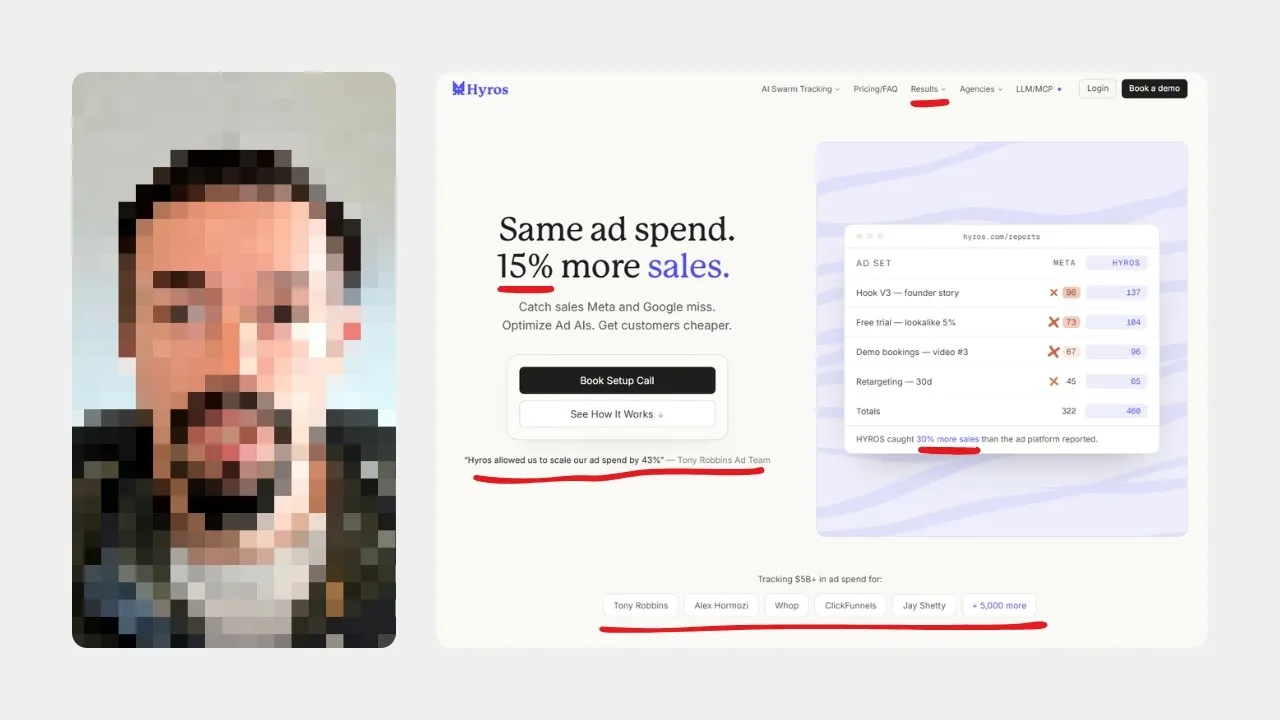
Investors and advisers are the third. The reason “backed by Y Combinator” turns up everywhere is that it’s a name, a liking and a trust you haven’t had to build. It works hardest when the investor already backs the kind of company you’re selling to, because then their credibility is pointed at exactly your buyer.
The companies around you
Partners, tooling and integrations are the external half, and the line between those three gets blurry fast. Plenty of companies present integrations in a frame that reads as partnerships, usually because they don’t have enough real partners to fill the row.
Zapier was the early master of this. Before anyone knew the name, it borrowed the logos of every tool it connected to. Other people’s recognition closed its trust gap. It doesn’t need to now. You’ll still see the move on CRMs, project management tools and anything whose value depends on what it plugs into.
My view is that presenting a vendor as a partner is misleading, and it’s worth being careful about, which I get into at 3:28. Show the integrations as integrations. The logos still do the work.
What counts as proof before customers do?
Your own numbers. Product usage, waitlist size, any demand signal you can show. None of it says somebody paid you, but all of it says somebody wanted this, and that’s a different claim worth making on its own terms.
Radical transparency is the same idea in a different shape: founder-led content, building in public, a public roadmap. It converts the absence of a track record into a reason to watch. Launch platforms do a version of it too, and in tech Product Hunt is the obvious one, giving you usable assets out of early traction.
| Substitute | What it borrows | The catch |
|---|---|---|
| Founder or team experience | A track record on this exact problem | Only counts if it is the same problem |
| Dogfooding | Evidence the product does the job | You are vouching for yourself |
| Investors and advisers | Their name, and their network | Strongest when they also back your buyers |
| Partners and integrations | The recognition of what you connect to | The line to “partner” is thin, so be straight |
| Usage, waitlists, public roadmap | Demand, ahead of revenue | Small numbers read as small |
| Expert quotes | Somebody else’s authority | Must be about the problem, not about you |
| Industry stats | The publisher’s credibility | You are the answer, they are the evidence |
Expert quotes and industry stats
Both borrow authority from outside the company, and they’re the fallback when none of the above applies. An expert quote should come from someone genuinely qualified on the subject, talking about the problem you solve rather than about you. Selling longevity software that tracks VO2 max, you’d be collecting what someone like Peter Attia has said about that exact pain point.
Industry stats work the other way round: you frame your product as the answer to a problem the industry already agrees it has. The credibility comes from whoever published the number, so choose the source for its standing with your buyer.
I used this with Roof AI, who improved on-page conversion for real estate brokerage websites. The framing was a known industry problem, that visitors leave brokerage sites without ever submitting their details, sourced to a name the real estate industry already trusted. The stat did the arguing. We were just the answer to it.
Beg and borrow, never fake
Do not steal or invent credibility. People find out, and they find out later rather than sooner, which is the expensive version. Borrowing is legitimate because every substitute above is something that actually happened; faking is a different activity with a different ending.
And “beg” is doing real work in that phrase, because there’s a sequence for turning borrowed credibility into the real thing. Give the product or service away free until you have your first case studies, which is what the ones on my work page are made of. Then move to discounting, trading a percentage off next month for a written story. Then, once you have enough to be compelling, build a pipeline that captures voice of customer from paying customers in every format you need.
That last step is the one that makes it permanent, and it’s where this stops being a launch problem and becomes an operating one, which I lay out at 8:11.
How much proof is enough?
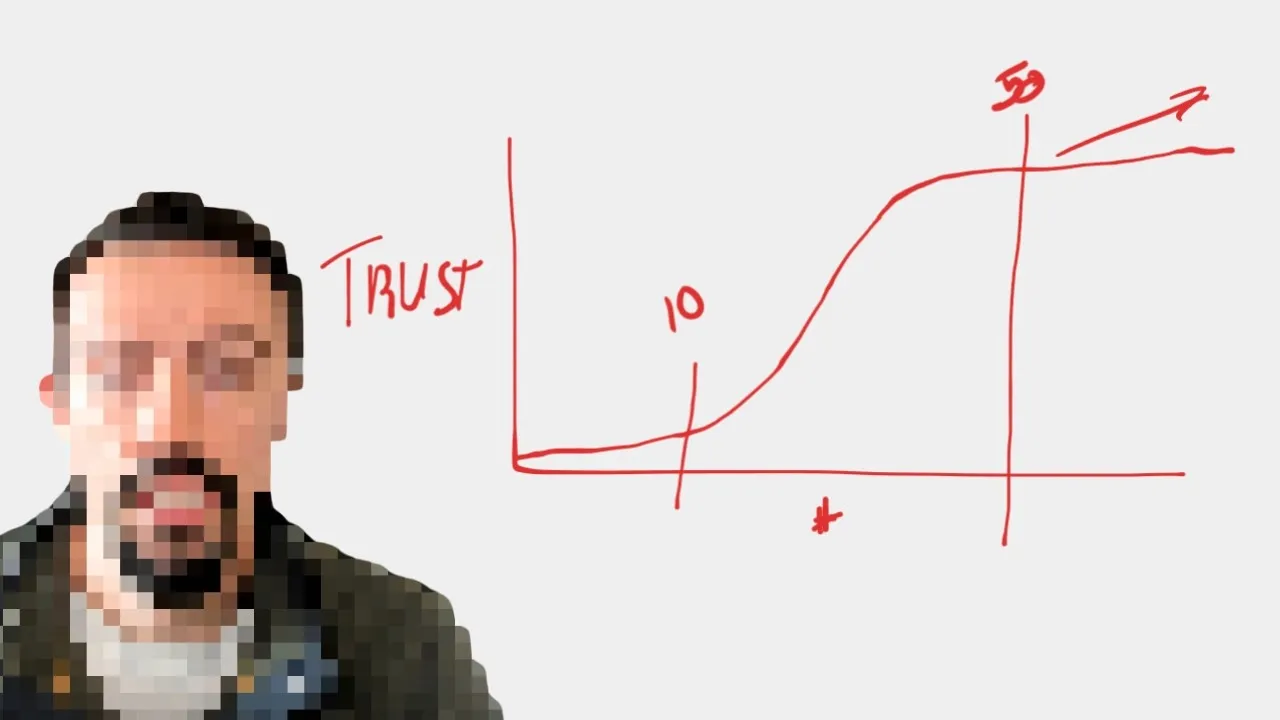
Less than you’d guess, and more than you have. Social proof follows a diminishing-returns curve, so the value of the next asset depends entirely on how many you already hold. There are three stretches of that curve and they behave completely differently.
Below roughly ten assets you cannot build trust at all, and the only useful move is more. Between ten and fifty, every one you add earns its keep, and this is the stretch where the work pays. Past fifty, a reader is already saturated, and another case study stops being the biggest lever you have. At that point the traffic arriving at the page is worth more attention than the page itself.
Those numbers are for B2B, and they move with the product and the industry, which is where I finish. Treat them as the shape rather than the spec.
So the job at zero isn’t to look like a company with customers. It’s to be honest about what you do have, point it at the problem your buyer actually has, and get to ten real assets before you optimise anything else.
Where those assets then go, and which one belongs at which stage, is the other half of this — and once you have customers to choose between, which of them to put on the page is the next decision. If you want a read on what you could be borrowing right now, tell me what you’re launching.